American Prometheus
The Triumph and Tragedy of J. Robert Oppenheimer
At a glance
- In a line
- An exceptionally well-researched, outstanding biography of Oppenheimer and his times.
- Read it if
- you saw the film and want the full story.
Read next
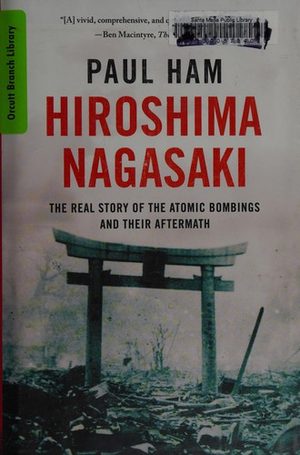
My desire to read American Prometheus authored by Kai Bird and Martin Sherwin germinated from the knowledge that Christopher Nolan’s magnum opus was inspired by the book. I had learned about Robert Oppenheimer’s work in spearheading Project Manhattan through my earlier readings on the atomic bombing of Hiroshima and Nagasaki1 however, these readings provided a very sketchy understanding of Oppenheimer, the physicist. On the other hand, American Prometheus is the culmination of research spread over 25 years. The scope and scale of the book are breathtaking. Most biographies are authored on men and women who ignite our imagination by their influence on the trajectory of mankind. Oppenheimer’s life is worthy of such an examination for his lead role in the epoch-making development of the first nuclear bomb, the subsequent bombing of Hiroshima and Nagasaki, and his travails from there on. Bird and Sherwin capture the essence of the book in the preface, asserting that “American Prometheus explores the enigmatic personality of Robert from his childhood on New York’s Upper West Side at the turn of the twentieth century to his death in 1967. Like that rebellious Greek god Prometheus—who stole fire from Zeus and bestowed it upon humankind, Oppenheimer gave us atomic fire. But then, when he tried to control it, when he sought to make us aware of its terrible dangers, the powers-that-be, like Zeus, rose up in anger to punish him.”
At close to 600 pages of text, Bird and Sherwin take the readers on a journey from cradle to grave, chronicling Robert’s journey from a shy reticent boy, to a notable theoretical physicist, to the head of the Manhattan Project’s secret weapons laboratory, from a prophet to a pariah hounded for his early-life communist empathies and eventually to a recluse seeking to awaken the world to the perils of nuclear weapons. Born to a wealthy textile importer and a cultured, creatively inclined mother, Robert enjoyed a privileged upbringing. Robert was a brilliant student educated at the Ethical Culture Society School under the tutelage of Felix Adler a reformist who founded the sect Ethical culture to temper traditional Jewish outlook. His transformation from a shy boy
1 An excellent account of the atomic bombs dropped on Hiroshima and Nagasaki is in the book 9tled, “Hiroshima and Nagasaki - the real story of the atomic bombings” by Paul Ham bullied by peers to a man exuding an aura of confidence is vividly captured by the authors. While Oppenheimer majored in chemistry at Harvard University, after graduating summa cum laude he turned to physics and pursued graduate studies in Europe at both Cambridge University and the University of Göttingen. It was at Göttingen that Oppenheimer found himself at the heart of a pivotal moment in the development of theoretical physics, one to which he soon made several notable contributions.
Earning his doctorate at the age of just 23, he returned to the United States and began teaching at the University of California. His fame as a physicist began to grow with the emergence of the school as a leading center for scientific study, where he mentored an entire generation of promising young physicists. It was at this time that Oppenheimer was drawn towards communism as a panacea for many societal ills. He began associating himself with many known communists and even began contributing financially to the communist parties based in America. These associations with individuals and organisations sowed the seeds of the inquisition that he would face many decades later. He also began supporting political causes with communist overtones. A sizeable portion of the book is devoted to presenting these relationships and exploring the question of whether Oppenheimer ever became a member of the party, however, the answer is insufficient. In the end, only Oppenheimer could have known for certain whether or not he was a Communist. However, in retrospect, his actions were apparently poor choices in ideologically and patriotically charged times.
Oppenheimer’s association with Communists placed him squarely under the lens of the FBI and questioned his employability to lead the Manhattan Project. The opposition to his selection was linked to the perception that his scientific ability was limited to that of a theorist and not a creator. Furthermore, his political leanings and total absence of administrative experience also made him an unlikely choice. However, it was well known in the rarefied world of physics, that Oppenheimer was not just a deep thinker but also a great synthesiser. Ultimately, General Leslie Groves prevailed and chose him over the distinct opposition at multiple levels of the government. Contrary to assertions of his detractors, he grew quickly into the role of a scientist and an administrator, harnessing and organising the mammoth aggregate of scientific talent recruited to work at the Los Alamos site. Eventually, at great personal cost, toiling over two and half years, the Los Alamos team built the first atomic bomb.
The atomic bomb was first dropped on Hiroshima and then Nagasaki, however after the war was over Oppenheimer learned that the Truman administration had used the bomb on an enemy that had largely been defeated. Confessing to the President, Harry Truman, that he felt that he had “blood on his hands,”. Oppenheimer began to recognise the impending potentially catastrophic arms race and tried to influence the direction of American policymaking in the hope of warding off an arms race. These efforts were soon pre-empted, however, by the growing tensions between the United States and the Soviet Union. The context of the emerging Cold War made Oppenheimer’s efforts to concede America’s advantage in atomic weapons particularly suspect. Over time his guidance in policymaking circles was slowly but steadily relegated and his views stoked his critics and opponents. During his time in Princeton, he developed a relationship of hostility with Lewis Strauss, a Republican and member of the newly-formed Atomic Energy Commission (AEC). After being named as the commission’s chairman by Dwight Eisenhower in 1953 Strauss pushed to annul Oppenheimer’s security clearance, with his efforts culminating in a series of hearings in the spring of 1954 that eventually resulted in Oppenheimer losing his security clearance a day before its expiration. The veritable witch-hunt during the AEC hearing of Oppenheimer was reflective of the extent to which McCarthyism afflicted the United States in the 1950s. Oppenheimer stoically absorbed the humiliation of his loyalty being questioned and labelled a risk to national security.
Bird and Sherwin detail the public debate during and after Oppenheimer’s humiliation arguing that resultantly the scientific community realised that there were limits to questioning the government’s stance on security issues and retribution for open dissent would be swift and messy. While Oppenheimer enjoyed a measure of rehabilitation after the Democrats were elected with President Kennedy in the lead; he remained detached from public affairs to the end of his life in 19672. Oppenheimer’s contribution both as a scientist and an administrator suffered consequent to the opprobrium he faced after the revoking of his security clearance. The authors persuasively outline the slow but steady fading away of his scientific brilliance and its replacement with a melancholic quiet resignation to fate.
Oppenheimer was a man of great contradiction. He was a quintessential polymath with interests and intellects ranging from poetry, philosophy, history, literature, and languages. He considered Bhagwad Gita as the second greatest book ever written.3 He was kind yet brusque, patient yet irritable, condescending yet supportive, resilient yet fragile, and inflexible yet malleable. Bird and Sherwin sympathise with the protagonist but spare him no courtesy as his failings are painted front and center; such as his adulterous flings, the alcoholism of his wife, his political naivety, and his passive surrender to his enemies. Oppenheimer’s life is also a tragic story of success and fame unfortunately underwritten by a grim personal life. His children never really succeeded in life and suffered due to their strained relationship with their parents and the pressure of life under the arc lights of their father’s fame.4 His wife Kitty played a central role in his life. She was his confidante through thick and thin. Oppenheimer continually turned a blind eye to her struggles with alcoholism and her many other failings, for her unwavering companionship.
Notwithstanding the near-unanimous praise for the book, in my opinion, there are some downsides to this epic work. Firstly, there is a lack of any examination of the scientific challenges in the making of the bomb. His scientific achievements are also mentioned rather sparsely compared to the in-depth examination of the other facets of his life. Arguably, Richard Rhodes’s masterful books, The Making of the Atomic Bomb and Dark Sun and The Making of the Hydrogen Bomb better hero his scientific contributions while also following the turbulent events of his life. The second downside of the book is the excessive detailing of the investigation by AEC and the minutiae of his liaison with the so-called communists. The details on this count are often repetitive.
Overall an exceptionally well-researched, outstanding biography that is more than a worthy read for those interested in learning more about the so-called father of the Atomic bomb and the challenging times that he lived in.
2 Oppenheimer passed away on 18 February 1967, suffering incurably from throat cancer 3 In 1963 in a televised interview when he was asked to name the books that shaped his philosophy, the first book on his 10-book list was list was Baudelaire’s Les fleurs du mal, and then came the Bhagavad-Gita and last was Shakespeare’s Hamlet. Famously, he recounted from Bhagwad Gita aUer the Trinity test at Los Alamos, ‘Now I am become death, the destroyer of worlds.’ Even the name of the site, ‘Trinity’ arguably originated from the Bhagvad Gita. 4 His son Peter lived his life as a contractor and a carpenter, while his daughter Toni, dabbled in various jobs and eventually commiZed suicide on the St John Island beach coZage of Oppenheimer.
Reviewed by Himadri Bose · Dec 2023