Hitler and Churchill
Secrets of Leadership
At a glance
- In a line
- Underwhelming: a retelling of known anecdotes that oversimplifies two very different leaders.
- Read it if
- you are a completist on Roberts or on leadership.
Read next
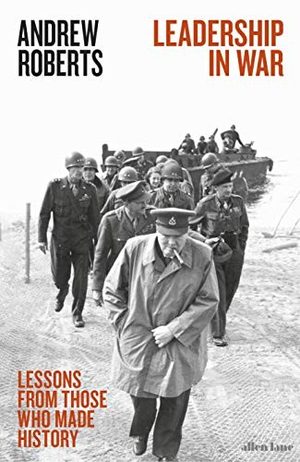
The key question emanating from the book is, whether leadership lessons can be learned by overlooking the ethical dimensions of the leader’s role in history. Andrew Roberts argues, ‘Yes’.
It is an interesting read albeit cerebrally unsatisfying as he attempts to contrast the two styles of leadership while highlighting behavioural differences and certain similarities. Both had charisma, cultivated their oratory skills, learned to use symbolism, and knew how to rally men for causes they believed in. Their styles of leadership are poles apart and the book is replete with innumerable anecdotes laying out these differences. Churchill delved into the minutest of details while Hitler was a hands-off leader. Their man-management styles were also sharply contrasting.
The book was written to accompany a BBC2 television series and herein lies the problem. The demands of screenplay and storytelling make the book a succession of period-piece anecdotes. Furthermore, both men have been written about interminably and therefore there is very little to excavate anew and analyse. Resultantly, the book converts into a regurgitation of known scholarship on Hitler and Churchill. Adding to the bland mix are many controversial assertions such as the origin of Hitler’s antisemitism, personal finances, character flaws, etc. Consequently, he struggles to maintain the flow as he consistently needs to circle back to the central theme of extracting nuggets of leadership arguing "While it is impossible to imagine two men more different than Hitler and Churchill, as leaders they had much more in common than one might think." In his goal to tell a parallel story and dredge up parallel leadership tales he often oversimplifies complex social interactions.
Overall, the book is underwhelming and intellectually unsatisfying and pales in comparison to the other fine works of Andrew Roberts. You won’t miss much if you were to give it a pass.
Reviewed by Himadri Bose · Mar 2024