Nehru
The Invention of India
At a glance
- In a line
- A refreshing, honest and balanced take on Nehru's contributions and failings.
- Read it if
- you want Nehru without the noise.
Read next
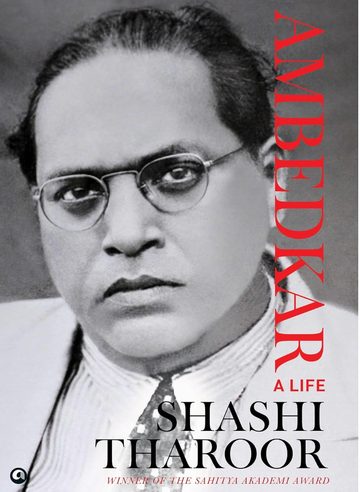
I began reading this book to revisit the relevance of Nehru in a historical context and to appreciate his successes and his perceived failures. Tharoor writes impressively with sharp insight and considered opinions. The honesty in his examination of the socalled Nehruvian ideology and its imprint on India in the present time was extremely engaging, and cogently educative. Considering the author’s political leaning, I was apprehensive this might be a biased book glorifying Nehru and being a lesser critique about his mistakes. However, Tharoor gives a fair detail of Nehru, his idea of ‘Invention of India’, his dreams about India and his efforts to achieve that dream without shying away from mentioning and being critical of his failures in the process.
Tharoor writes with unsparing objectivity that the Indian consensus that Jawaharlal Nehru constructed as the nation's first prime minister, has frayed, democracy continues to endure, secularism is besieged, nonalignment is all but forgotten, and socialism is barely clinging on. Today, Nehru seems "curiously dated, a relic of another era." His goal of creating "a just state by just means" has been undermined by the centrifugal forces of Indian religious and cultural divisiveness.
Nehru's privileged Kashmiri background and Harrow-Cambridge education left him replete with paradoxes—a reserved aristocrat yet a near Marxist, a demigod (to the masses ironically) and a democrat (to himself), a political prisoner of the British for nine years who was even more a prisoner to his own "vainglory," an idealist with "a moralism that stood somewhere to the left of morality."
The book is a genuine attempt at distilling the great and varied life of Nehru. The book in the first half, portrays Nehru as someone beyond repudiation by mere mortals. One even suspects that this is a hagiography at a point. But the doubt is easily dispelled, once we get to the second half. The author is unapologetic when portraying the faults of the great man, and doesn't try to deify him at any point. He draws from a variety of sources, is critical of some Nehruvian policies and makes a very good case when he says that Nehru put the political horse before the economic cart.
He's objective and critical in bringing out Nehru’s numerous flaws- his poor and undistinguished performance in studies, his mediocre practice at law, his reliance on his wealthy father to fund his socialist existence, his reliance on contacts and influence within the colonial government which regularly gave him certain benefits not offered to other freedom fighters. His blunders on the international front because of his impetuousness and naivete. His flawed understanding and implementation of affirmative action to exterminate casteism leading to its regeneration today, when caste is singularly linked to opportunity and has become all important again.
Tharoor’s summary is precise, “ Nehru’s impact on India rested on four major pillars — democratic institution-building, staunch pan-Indian secularism, socialist economics at home, and a foreign policy of nonalignment. ……Of the four major pillars of his system, two — democratic institution-building and staunch secularism — were indispensable to the country’s survival as a pluralist land; a third, nonalignment, preserved its self-respect and enhanced its international standing without bringing any concrete benefits to the Indian people; the fourth, socialist economics, was disastrous, condemning the Indian people to poverty and stagnation and engendering inefficiency, red-tapism, and corruption on a scale rarely rivalled elsewhere.”
The book provides a balanced understanding of Nehru without providing the biographical in nature granular detail. Today, when the memory of Nehru is much maligned this book is refreshing and an honest take on his contributions and his failings. Tharoor once again underscores his credentials as an author of substance.
Reviewed by Himadri Bose · Jan 2023