American Generalship
Character Is Everything: The Art of Command
At a glance
- In a line
- Among the best books on military leadership: character, Puryear shows, is built over a career.
- Read it if
- you lead people, in uniform or out of it.
Read next
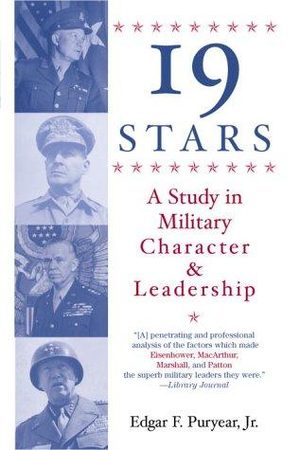

In 1971, Edgar Puryear authored a masterful book Nineteen Stars: A Study in Military Character and Leadership, a comparative study of the leadership of four of the most outstanding American generals of World War II, Gen George C. Marshall, Gen Douglas MacArthur, Gen Dwight D. Eisenhower, and Gen George S. Patton Jr. The title Nineteen Stars corresponded to the number of stars earned by these generals. Building on this masterful work, Puryear culminates 35 years of research into a book that examines the fundamental traits of great leaders. Examining this central idea Puryear concludes that of all the elements of a leader’s personality; character is everything. It permeates through all the qualities essential for leadership success. This book has as its purpose the objective of giving life and meaning to what character is. “It cannot be defined. It must be described.” The book has nine essential chapters covering an indispensable element of a successful military leader’s character. The book is replete with anecdotes drawn from his rich examination of great American generals.
The leadership profiles of the generals researched by Puryear reveal the qualities they exhibited, that they had in common, and that made them great. It includes a selfless desire to serve; to accept responsibilities for decision making, which Eisenhower said is the essence of leadership; to the “feel” of “sixth sense” in decision making; to not be “yes men” in serving their seniors; to not tolerate a “yes man”; to read widely; to serve under senior officers who selected and mentored them, the reward meaning longer hours, greater challenges, and greater sacrifices for themselves and their families; to be concerned for and considerate of their people; to realise that the ability to delegate determined how far they would go; and when problems surfaced, to fix the problem and not the blame. With a combination of these qualities, these men met the requirements of command with great success.
@himadribose The book includes eleven chapters, each covering some component of this elusive leadership character: (1) Selflessness; (2) Decision: The Essence of Leadership; (3) "Feel" or "Sixth Sense" in Decision Making; (4) Aversion to "Yes Men": Having the Character to Challenge; (5) Books: The Importance of Reading; (6) Mentorship: Guidance, Counselling, Advice, Teaching, and Door Opening; (7)Consideration; (8) Delegation; (9) Fix the Problem, Not the Blame; (10) Reflective Descriptions of Character; and, (11) The Pattern. There are some remarkable stories contained in the book however, I was particularly enthralled by the fifth chapter concerning reading.
Indecisiveness, contends Puryear, marks the poorest leaders. Some other patterns he discerns: loyalty requires giving an honest opinion whether the boss likes it or not, but once a decision is made, the debate ends and the decision must be executed faithfully. Great leaders avoid, “yes men.” Leaders mould more leaders. A leader’s actions are always tempered by experience. The incremental benefit of experience is often the elusive “sixth sense” in decision making. Most top commanders were voracious lifelong readers, MacArthur inherited 4000 books from his militaryhero father.
Puryear asserts that character is not necessarily built in the heat of battle, nor is one always born as a leader. It develops from the consistent application of moral values and ethical behaviour throughout one’s military career. As a career naval officer, having read many books on leadership, and biographies that capture the lives of great military leaders; I would rate Puryear’s work among the best. It is worthy of being considered essential reading on military leadership, and “The Art of Command”.
@himadribose
Reviewed by Himadri Bose · Apr 2023