How Prime Ministers Decide
At a glance
- In a line
- An engaging ringside view of prime-ministerial politics, stronger on anecdote than on how decisions are made.
- Read it if
- you enjoy the inside story of Indian politics.
Read next
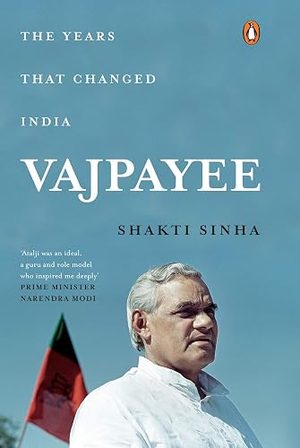
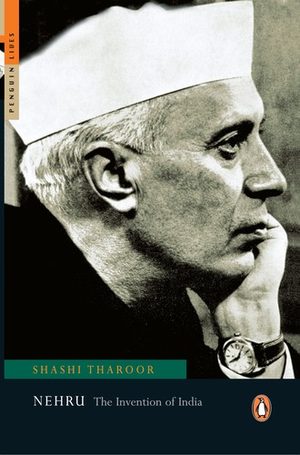
Neerja Chowdhury’s book, "How Prime Ministers Decide," examines the intricate dynamics of prime ministerial politics in India and addresses a significant gap in understanding the Prime Minister led decision-making processes in a parliamentary democracy. Despite the critical role of prime ministers, there remains limited comprehension of their decision-making mechanisms and accountability to the parliament and the public. Chowdhury’s work offers an engaging and insightful exploration of power struggles, intrigues, and rivalries at the highest levels of Indian politics over the past four decades.
The book provides a vivid portrayal of the political landscape, granting readers an insider’s view of the interactions and relationships among key political figures. Its analysis supplies substantial evidence on how prime ministers confront various crises. It is supported by numerous captivating anecdotes illustrating key events, major actors involved at pivotal moments, and the nature of their engagements. However, while it chronicles significant political decisions made by six prime ministers from 1980 to 2014, it does not thoroughly investigate the crucial mechanisms of decision-making or the rationale behind the steps taken by these leaders.
Chowdhury highlights six critical decisions made by prime ministers during this period, serving as a historical reference and a means to understand contemporary political dynamics.1 Notably, the author suggests that these leaders operated primarily as autonomous agents, acting with considerable independence from socioeconomic forces and institutions that typically impose checks on political power. This observation reveals a trend of decision-making characterised by a lack of institutionalised approach to decision-making and lack of transparency, culminating in a centralised, top-down approach, despite the democratic and federal developments in the Indian polity over the
1 Indira Gandhi’s comeback, Rajiv Gandhi and the Shah Bano episode, VP Singh’s Mandal gambit, P.V Narasimha Rao and the Babri Masjid incident, Vajpayee and the testing of the nuclear devices and, Manmohan Singh and the Indo-US civil nuclear deal are the six instances outlined in the book.
19-Jan-25 past decades. This assertion is one of the book’s core conclusions, reflecting an understanding of how these prime ministers navigated their political journeys.
While the book does not present ground-breaking revelations, it utilises well-known stories and historical contexts, such as the Congress party's missteps with the Shah Bano verdict and the Babri Masjid controversy. Chowdhury effectively uses existing information to construct her narrative. However, what enriches this account is her interviews and dialogues with individuals close to the seats of power, which add depth and credibility to her analysis. Nonetheless, it is worth noting that some quotes from other sources lack proper citation, raising concerns about the intellectual rigour of some aspects of the narrative. Furthermore, the documentation style is unconventional, presenting challenges to the reader in following the references linked to the text.
Chowdhury devotes a chapter to Indira Gandhi, exploring her relationship with Hinduism. While she portrays Gandhi as a devout follower, it is essential to recognise that her decisions were not primarily shaped by her religious beliefs or any ideology of Hindu supremacy, especially in contrast to contemporary leaders. A critical question arises regarding how we assess the effectiveness of prime ministers. Should it be based on their tenure, grip over their parties, or capability to influence political agendas? It is crucial to acknowledge that not all prime ministers’ function within the same framework; they represent varying parties, ideologies, and cultural backgrounds, all impacting their leadership style and political manoeuvres. For instance, the rise of the BJP in India cannot be fully comprehended without recognising Atal Bihari Vajpayee’s significant contribution to the core drivers of BJP’s political ideology.
The exploration of these six prime ministers reveals a complex interplay of political ideologies and personality traits, which have shaped their political trajectories and influenced the broader evolution of Indian democracy. Chowdhury’s intense focus on the complexities of power dynamics often overshadows the importance of ideology in the formation and dismantling of both prime ministers and the democratic fabric of the nation. Understanding the legacies of past prime ministers is vital for interpreting contemporary politics; however, it is equally important to analyse the current political context to discern how it diverges from historical precedents. The book notably omits an analysis of Prime Minister Narendra Modi, deeming him a “work in progress.”
In summary, "How Prime Ministers Decide" presents an engaging narrative on Indian prime ministerial politics, combining personal anecdotes and historical events that shape the political landscape. While it successfully chronicles significant decisions and power struggles, it fails to thoroughly explore decision-making processes and the ideological undercurrents influencing these leaders. Recognising the interplay between political ideology and leadership styles is essential for a comprehensive understanding of India's past and present political dynamics. Nevertheless, it is an insightful read that provides an excellent ringside view of the layered relationship between political discourse and democracy.
19-Jan-25
Reviewed by Himadri Bose · Jan 2025