At Dawn We Slept
The Untold Story of Pearl Harbor
At a glance
- In a line
- The definitive single-volume study of Pearl Harbor; exhaustive, at times excessively so.
- Read it if
- you want to understand how surprise happens.
Read next
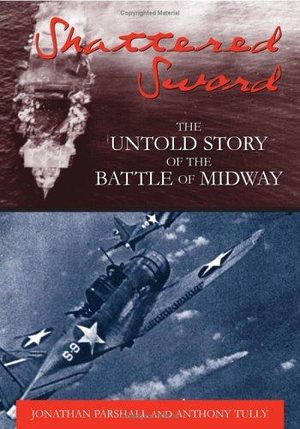
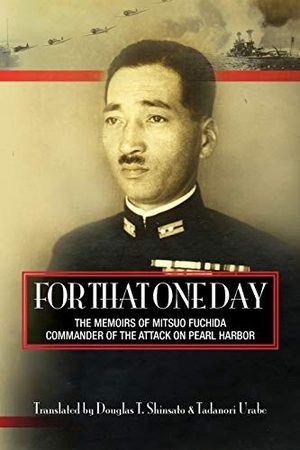
Among the enormous body of literature written on the Attack on Pearl Harbour, few works possess the authority, depth, and enduring reputation of At Dawn We Slept. Widely regarded as the definitive single-volume study of Pearl Harbour, Gordon W. Prange’s monumental work stands not merely as a narrative of the Japanese attack of 7 December 1941, but as perhaps the most comprehensive reconstruction ever attempted of how modern states, despite immense military strength and extensive intelligence systems, can drift toward strategic catastrophe. Completed posthumously by Donald M. Goldstein and Katherine V. Dillon after 34 years of research and writing, the book occupies a unique place within military historiography. It combines operational detail, diplomatic history, intelligence analysis, bureaucratic politics, and human experience into a unified historical narrative of exceptional scale and sophistication.
The greatness of At Dawn We Slept lies fundamentally in the seriousness of its historical ambition. Prange does not approach Pearl Harbour as an isolated military surprise confined to a single morning. Instead, he situates the attack within the wider deterioration of American–Japanese relations during the late 1930s and early 1940s. Economic sanctions, imperial expansion, naval planning, failed diplomacy, racial assumptions, and institutional rigidity all become part of the larger historical structure that culminated in the attack. Pearl Harbour therefore emerges not as an inexplicable disaster, but as the consequence of accumulated strategic misjudgements and bureaucratic failures unfolding gradually over years.
One of the defining strengths of the work is its extraordinary empirical foundation. Prange spent decades collecting operational records, intelligence documents, diplomatic correspondence, and interviews from both American and Japanese participants. This dual-perspective methodology distinguished the work from many earlier studies that viewed the attack overwhelmingly through an American lens. Prange reconstructs Japanese strategic thinking with remarkable nuance and seriousness. Admiral Isoroku Yamamoto and the planners of the Imperial Japanese Navy are presented neither as caricatures nor as mythologised masterminds, but as strategic actors responding to geopolitical pressures and attempting to secure temporary naval superiority before American industrial mobilization could decisively alter the balance of power in the Pacific.
The operational reconstruction of the Japanese strike remains one of the finest achievements of the book. The planning and execution of the attack are narrated with extraordinary precision: carrier coordination, aerial tactics, torpedo adaptation for shallow waters, radio silence procedures, navigational planning, and strike sequencing are all described in meticulous detail. Prange demonstrates that Pearl Harbour represented not simply a successful surprise attack, but a revolutionary moment in naval warfare itself. The destruction of the American battleship fleet symbolised the decline of battleship-centered naval doctrine and the emergence of carrier aviation as the dominant instrument of maritime power. In this respect, the work remains essential not only to historians of the Second World War, but also to scholars of maritime strategy and naval transformation.
Yet the true intellectual core of At Dawn We Slept lies in its examination of intelligence failure and institutional paralysis. One of the reasons the book continues to be regarded as the finest study of Pearl Harbour is that it moves beyond simplistic explanations. Prange rejects conspiracy theories alleging deliberate foreknowledge of the attack while also refusing the equally simplistic argument that American leaders were wholly ignorant. Instead, he demonstrates that strategic surprise often occurs not because information is absent, but because institutions fail to interpret available information correctly.
American authorities possessed multiple warning signs before the attack. Diplomatic negotiations with Japan had deteriorated severely, intercepted communications revealed growing urgency within Japanese policy circles, and military planners understood that war in the Pacific was increasingly likely. Yet these warnings failed to generate effective preparedness because they were filtered through deeply entrenched assumptions. American commanders expected Japanese aggression in Southeast Asia or against the Philippines rather than a carrier strike against Hawaii. Pearl Harbour appeared strategically improbable despite mounting indications of danger. The tragedy therefore emerged less from total ignorance than from fragmented interpretation, bureaucratic compartmentalisation, and institutional rigidity.
Prange’s treatment of this issue is particularly significant because Pearl Harbor became the subject of one of the largest fault-finding exercises in modern American history. In the aftermath of the attack, multiple commissions, congressional inquiries, military investigations, and public debates attempted to determine responsibility for the disaster. Senior commanders such as Admiral Husband Kimmel and General Walter Short became central figures in these controversies. Questions regarding whether Washington had failed to provide adequate warnings, whether intelligence had been mishandled, and whether commanders in Hawaii had been unfairly blamed generated decades of political and historical dispute.
One of the great achievements of At Dawn We Slept is the manner in which it navigates this contentious terrain with remarkable restraint and balance. Rather than reducing the catastrophe to the failures of a few individuals, Prange portrays Pearl Harbour as a systemic failure distributed across institutions, assumptions, and chains of communication. The book neither fully condemns nor entirely exonerates individual actors. Instead, it demonstrates how fragmented authority, poor interservice coordination, ambiguous warnings, and bureaucratic inefficiency collectively produced vulnerability. This balanced treatment explains much of the book’s enduring authority. Many narratives have often sought clear villains or dramatic conspiracies, whereas Prange presented a far more complex and historically credible picture of institutional breakdown.
At the same time, the work implicitly contributes to the partial historical exoneration of several figures who had long been blamed for the attack. By reconstructing the informational confusion facing commanders in real time, Prange reveals the extent to which many decisions were shaped by incomplete intelligence, contradictory assumptions, and uncertainty regarding Japanese intentions. The reader comes to understand that the disaster cannot be adequately explained through accusations of simple negligence or incompetence. Instead, Pearl Harbour appears as the product of systemic strategic blindness within a large and fragmented military bureaucracy.
The narrative style further elevates the work above most studies of Pearl Harbour. Despite its immense scale, the book possesses remarkable readability and dramatic force. Prange combines archival rigour with narrative pacing that often resembles a carefully constructed tragedy. The chronology of the morning attack unfolds with mounting inevitability, yet the reader remains immersed in the confusion and uncertainty experienced by participants themselves. Individual sailors, pilots, commanders, and civilians appear within the larger strategic framework without reducing the analysis to emotional sensationalism. The prose reflects the grand tradition of narrative military history: expansive, authoritative, and deeply immersive.
Critics have occasionally argued that the work’s extraordinary detail becomes excessive. Entire sections catalogue communications traffic, ship movements, and administrative exchanges with overwhelming precision. Modern readers trained in political science or strategic theory may also find that Prange leaves certain analytical concepts implicit rather than explicitly theorised. Issues such as bureaucratic politics, organisational learning, cognitive bias, and intelligence failure are demonstrated through narrative rather than systematically analysed through formal theoretical frameworks. Additionally, later archival releases complicated aspects of the book’s interpretation regarding intelligence awareness in Washington prior to the attack. Yet these limitations do little to diminish the colossal stature of the work. Indeed, the persistence of scholarly debate surrounding At Dawn We Slept reflects its foundational importance. Later historians have revised aspects of its interpretation, but few have equalled its breadth, narrative power, or documentary richness. The book remains the central reference point against which most subsequent Pearl Harbour scholarship is measured.
Ultimately, At Dawn We Slept endures because it achieves something extraordinarily rare within military historiography. It transforms a famous military disaster into a profound study of strategic surprise, institutional failure, technological transformation, and human limitation. The book demonstrates how great powers, despite possessing vast intelligence systems and advanced military institutions, can remain vulnerable when assumptions harden into orthodoxy and information fails to become understanding. More than four decades after its publication, Prange’s masterpiece remains not only the finest work ever written on Pearl Harbour. A work rendered immortal by its extraordinary depth, analytical balance, and uncompromising historical seriousness, At Dawn We Slept remains the definitive study of Pearl Harbour and one of the towering achievements of modern military historiography.
Reviewed by Himadri Bose · May 2026