Supreme Command
Soldiers, Statesmen, and Leadership in Wartime
At a glance
- In a line
- An excellent case that political leaders must question their generals. A must-read for military leaders and decision-makers.
- Read it if
- you sit anywhere in the civil–military chain.
Read next
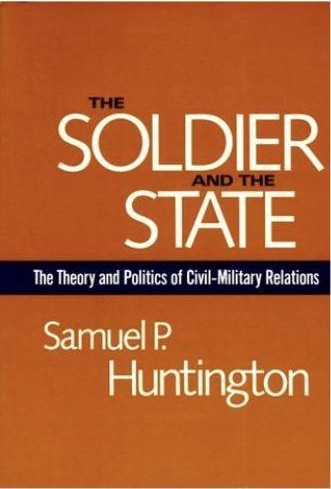
The book is about wartime leadership, or more precisely, the tension between the two prongs of leadership in war: military and the civil. Cohen explores the theme of civilians challenging the “normal theory” of civil-military relations, i.e. a military man is to present options while the civilian authority is to choose from those options merely. The four leaders that shape an examination of this theme defied the notion of “normal theory”. He argues that their wartime leadership conformed more with Huntington’s “ Objective control” notion.1 Cohen weaves his treatise around the study of wartime leadership of Lincoln, Clemenceau, Churchill and Ben Gurion.
Lincoln possessed a fine sense of understanding of military affairs, often better than his generals. He was sharp in assessing the military ability of his generals and involved himself in formulating military plans on a schematic level. Lincoln not only selected his generals but also made every effort to guide and train them. To this end, he believed that he had to master the details of war, from technology to organisation and the movement of armies, to enable himself to make informed judgements. He could understand the interplay of war and politics, and his ability to absorb military detail and to read human character made him one of the greatest American presidents and wartime leaders of repute.
1 Samuel Huntington in his seminal work, “Soldier and the State” described “Objective control” as the healthiest form of civilian control that maximized professionalism by isolating soldiers from politics, and giving them as free a hand as possible in military matters.
While Clemenceau’s legacy to the English-speaking students of military history remains his lament, “ war is too important to be left to the generals”. He was a far more significant leader beyond this simplistic adage ascribed to him. Clemenceau’s leadership style was founded on his first-hand examination of the battlefield, adroit management of affairs of and between him and the military commanders and his handling of civilmilitary relations in peace-making and the eventual peace treaty after the First World War. He was sharp and well-read and never accepted military assessments unquestioningly. He respected professional ability but was never over-awed by rank, famously remarking. “ It takes more than a hat with a golden braid to turn an imbecile into an intelligent man”.
There has been a consistent downward revision of Churchill’s stature as a wartime leader. From a man who signified the last bastion of Europe to his failure as a strategist, his strained relationship with the military often bordering on derision and his social eccentricities that frequently overshadowed his persona. Nevertheless, there is no denying the fact that Britain rallied around his leadership, and he spurred firm resolve in the heart of the average Brit. His ability to crunch information, delve deep into matters of the military and mastery of the spoken and written word made him a formidable leader. He put immense pressure on his military leaders to exercise his control over events instead by incessant close questioning of the staff. Churchill exercised one of his most important functions as a war leader by holding the calculations and assertions of his military leaders up to standards of an evolved common sense informed by wide reading and experience of war. His abilities to probe and shape a larger vision and fight for it in adverse circumstances were supplemented by his mastery of political rhetoric, an ability that John F. Kennedy later put as “mobilise the English language and send it to battle.”
Ben Gurion led Israel through the birth pangs of a nation born in the post-World War aftermath of the Jewish pogrom and shaped the IDF into a force of resolute professionalism. Ben Gurion had scant military experience; however, tenacity and cunning bred from decades of political work, talent as an orator driven by belief and command of the language, and the intellectual depth of a scholar made him a leader of substance and character. He combined the warm affection for soldiers and their commanders with a mistrust of military bureaucracy. He possessed an innate sense of grasping the political ramifications of military postures, evidenced by his ability to gauge the response of the Arab world as Israel went to war for its independence in 1948.
Much of the genius of these leaders lay in their ability to tolerate disagreement, even more in their ability to retreat from their own poor decisions or simply to change their minds. None of these men dictated to their subordinates; they tolerated and promoted men who disagreed. There was an “unequal dialogue” between these leaders and their military commanders. They both expressed their views bluntly indeed, sometimes offensively and unequally; however, in the end, the final authority of the civilian leader was unambiguous and unquestioned. These leaders could synthesise to comprehend various forces and the conditions for their interaction. “War is an option of difficulties”, and the ability to make choices among difficulties, based on the broadest possible perspective, marks a great wartime leader. Some key attributes of these great wartime leaders as flagbearers of “ objective control” in civil-military relations were their mastery of military detail, ability to judge context and character, question military rationale and capability, well-read in history, politics and literature, and mastery over the art of speech and writing. Above all, they had, as Napoleon once called, “three-o’clock-in-the-morning courage”, the courage of a statesman blessed and cursed with the ability to see things as they are, “without illusions”.
Cohen writes brilliantly, weaving an intricate and nuanced discourse on the pitfalls of the “normal theory” of civil-military relations. It is an excellent book that presents an alternate view to the widespread perception that political control of the military is to the detriment of its functioning and that the political leader is nothing but an armed chair strategist—a must-read for military men and all those in positions of decision making invested in civil-military relations.
My Rating 4.5/5
Reviewed by Himadri Bose · May 2024