West Asia at War
At a glance
- In a line
- Incisive, concise and comprehensive on West Asia's wars; deserves a place in every library.
- Read it if
- you want to understand West Asia's conflicts.
Read next
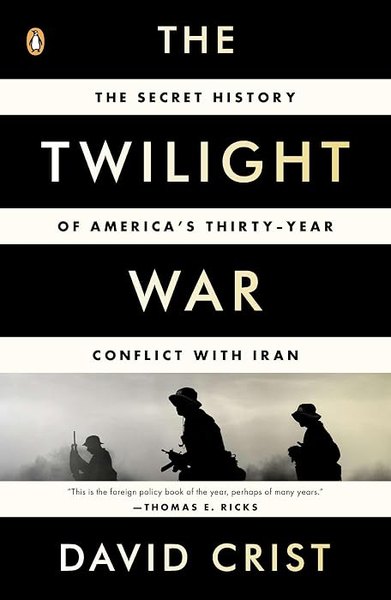
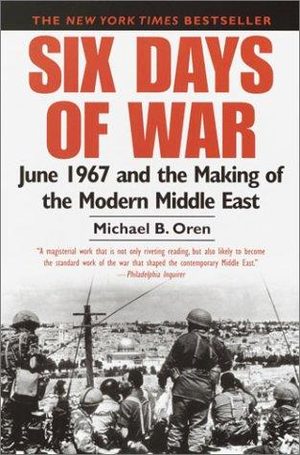
My quest for a book that offers a comprehensive narrative of West Asia that captures its tortuous past and tumultuous present, led me to Talmiz Ahmed’s, “West Asia at War”. The book offers a coherent and expansive account of West Asia that helps make sense of the dynamics of the region, capturing its political, religious, military, socio-economic, and cultural dimensions.
Talmiz, a career diplomat with multiple stints in West Asia, who has transitioned to the world of academia has a remarkable grasp of the undercurrents and the ensuing volatility of the region. The book is divided into 12 chapters, beginning in 1798 and terminating in 2021. Additionally, there is also a chapter chronicling India’s engagement with West Asia from 1950- 2021. The chapter scheme is outlined below:- 1. West Asia enters the modern era (1798 – 1900) 2. Five Decades of Nationalism (1900- 50) 3. Arab nationalism (1959-79) 4. The Islamic Revolution (1979-90) 5. Islam at the heart of West Asian politics (1979-2001) 6. Post-Cold War in West Asia: The First Gulf War to 9/11 ( 1990 – 2001) 7. 9/11 and after: a military debacle and failed ‘reform’ ( 2001-21) 8. Iran and Israel: US policies over two decades (2001-21) 9. The Biden Presidency 10. India and West Asia (1950 – 2021) 11. The West Asian malaise and the outlook for the region Despite the colossal scope of the book, it is remarkably well-written. Talmiz wryly admits, that every writer on the region lives in the constant dread that his confident assertions will be superseded by new, unexpected developments. The author has touched upon every possible geographical puzzle piece of West Asia. He builds a vivid narrative that captures the past with precise analysis and lucidly connects it to the present. Every chapter is rich in content and vibrant in scope almost deserving an independent review in itself. A chronological review of his book would entail almost rewriting it. Therefore, I have taken the recourse to highlight key takeaways from the book from certain chapters that make the book eminently readable. These insights are in no way comprehensive, but a mere window into the ornate tapestry of West Asia woven by Talmiz.
West Asia entered the modern era challenged by the military, political and cultural dominance of European powers. Egypt was occupied by the British; Algeria, Tunisia, and Morocco were occupied by France and Italy subjugated Libya. While West Asia and North Africa (WANA) were coping with colonialism, the flame of Arab nationalism was stoked by Islamic thinkers and theorists. Talmiz goes on to chronicle the influence of Muhammad ibn Abdul Wahhab in the creation of the Saudi state. Wahhab’s hostility to Shias, and Sufis and his intolerance of opposing views moulded Wahhabis into a united sect and kindled a spirit of fanaticism. Oil was first struck in Masjid-i-Sulaiman, Iran on 23 January 1908. The discovery of oil distinctly altered the geopolitical and geostrategic landscape of the region by bringing in Western powers keen to secure their energy requirements.
By far the most cataclysmic events that reshaped West Asia were the division of the Ottoman Empire under the Sykes-Picot agreement (1916) and the creation of Israel by the Balfour Declaration (1917). The Ottoman territories were divided into five separate states: Syria, Lebanon, Palestine, Transjordan, and Iraq. Talmiz argues that the one-sided settlements engineered by European powers in the early 1900s are at the very heart of the wars, conflicts, and political unrest in the Middle East.
Amongst all the wars with Israel, the defeat of Egypt in the 1967 war effectively sealed all prospects of Palestinian redemption. It pulled Egypt away from the broader Arab fold and surrendered Arab leadership to Saudi Arabia. For the Arabs, the defeat in the wars with Israel had to be endured with the torment of tyranny, either monarchical or republican. Every ruler who has occupied the throne in WANA has inaugurated a long reign of terror and subjugation of his people.
Moving onto the topic of the Islamic Revolution in Iran. The revolution in Iran was the result of the dangerous mix of a disenfranchised population and the rise of political Islam. After the revolution, the U.S. support for the overthrown Shah and the hostage crisis further added to the visceral hatred between the two countries. Adding to this animosity was the memory of the overthrow of a democratically elected government in Iran by the U.S. in 1953, an event that continues to poison the Iranian mind towards any form of U.S. overture. Meanwhile, Saudi Arabia saw the rise of the Islamic Republic as a challenge to the leadership of the Arab world. Its domestic scenario was further complicated by the ascendancy of Wahhabi zealots and their failed attempt to take over Mecca. Saudi Arabia saw itself as a leader of the Arab world but was now insecure by the rise of a Shia power. This set the stage for sharp sectarian divides that coursed through West Asia as Saudi Arabia staked claim to Arab-Sunni leadership by rallying the Sunni community. The Iran-Iraq war in two phases from 1980-82 and 1982-88 was a horrendous conflict that changed very little on the ground. However, the war engendered among the Iranians a deep sense of national unity and pride. For the first time, an Iranian state did not lose territory in two hundred years. Meanwhile, Saddam Hussain believed that, with great sacrifice, the war had been won and the revolution had been contained within the boundaries of Iran. He began to believe in his invincibility and sought rewards for Iraq’s sacrifices in the occupation of Kuwait in 1990.
The Iranian revolution and the Soviet invasion of Afghanistan led to the U.S. hurriedly announcing the ‘Carter Doctrine’, that pronounced Gulf oil as a vital interest and that America would respond if its security was threatened. The rise of Iran and Saudi Arabia’s desire to reassert its position of prominence led to the continued ascent of political Islam. Salafism mushroomed in varied ways ranging from quietist Islamism, activist Islamism (Muslim brotherhood), and radical Islam (Salafijihadism). The battleground of political Islam in its most violent form was Afghanistan, as President Carter signed on to provide secret assistance to forces in opposition to the pro-Soviet regime in Kabul in 1979. Even though the Soviets retreated from Afghanistan, the Jihad of many years by the Mujahideen and others, who fought the Soviets led to the conception of many extremist radical outfits, such as al Quaeda and others and, eventually culminated in the 9/11 attacks. After 9/11, the U.S. sought out its perpetrators in Afghanistan with the vengeance of a wounded hegemon. The results were two failed interventions with those nations descending into civil war and the ensuing creation of ISIS. Operation Desert Storm delivered 100,000 tons of explosives on Iraq – more than 5 times that of Hiroshima. The devastation of Iraq was unparalleled. The losses estimated by the Arab monetary fund totalled $ 190 billion. The U.S. war in Iraq and Afghanistan are military debacles that compete with the shame of the loss in the Vietnam War. Ironically, today, the Taliban are firmly entrenched in Afghanistan after more than two decades of American efforts to eradicate al Quaeda and bring democracy to Afghanistan. The U.S. fought the wars in Iraq and Afghanistan without any long-term strategy and with grossly inadequate resources, inflicted extraordinary destruction that cannot be repaired in decades.
The role of the U.S. has been central to the fate of the Middle East. U.S. policies in West Asia have been shaped by the desire to secure their energy necessities while kowtowing the regional security concerns of Israel. The pro-Israel lobby in the U.S. led by neo-conservatives wields hefty political and financial muscle. Presidential elections are made or broken by these powerful lobbies. America’s perceived interests have almost been synonymous with those of Israel. At the same time, blank cheques of forgiveness have been written out by the U.S. for Saudi military transgressions in the region. Besides, the U.S. has consistently used West Asia as an on-call buyers’ club for defense sales. The weapons sold by the U.S. have in turn fuelled sectarian violence and strife in the region. The conclusion of the JCPOA under President Obama and its subsequent revocation by Trump has marred the position of the U.S. as a country that can be banked upon. Iran is now reticent to revert to the restrictions of the JCPOA, cognisant that the U.S. is no longer a reliable party to the agreement; reinforcing the traditional view of the U.S. as an anti-Iran hegemon. The U.S. withdrawal from West Asia under Trump has also surrendered strategic space to Russia and China. Motivated by their common misgivings with America, the partnership between Russia, China, and Iran is flourishing, while the U.S. position as an erstwhile security guarantor has descended to nadir. As Talmiz most eloquently articulates, “ the wild swings in policy from internationalism to isolationism, from JCPOA to crippling sanctions – depict a superpower that has a dysfunctional political order at home, where powerful lobbies and special interest groups espousing narrowest of concerns, determine policies that often do not serve national interest.” U.S. policies of intervention in West Asia have caused immense hurt but have never healed the hurt with rehabilitation and reconstruction. The so-called U.S. societal values of protecting human rights and nurturing democracy have consistently been sacrificed at the altar of American interests in the region.
Over the ages, West Asia has continually suffered a broad pattern of external intervention in the region’s political and economic life – either directly through military force or through the support of local rulers. Today, West Asia suffers from both socio-economic and political malaise. 66% of the Arab population i.e. 250 million of the 400 million is poor or extremely vulnerable. Governments are largely authoritarian with the populace writhing in their quest for political space and empowerment. Meanwhile, regime survival is foremost in the minds of those in power. The demonisation of certain parts of West Asia and the creation of sectarian divides by the rulers and governments in power is aimed at fomenting uncertainty and consolidating the power of these repressive regimes. Consequently, the sharp sectarian divides that run through the region are the breeding grounds for extremist outfits such as ISIS. Attacks by these outfits in turn have coalesced aversion in Western societies towards adherents of Islam. Meanwhile, Iran continues to be enemy number one for the Sunni Arab world while Israel fulfills that role for West Asia in general. Both Iran and Israel breed xenophobia towards each other. Adding to this mix, governments and monarchs use insecurity beyond borders to cement the legitimacy of their authoritarian regimes. Eventually, the demonisation of enemies by Saudi Arabia, Israel, and Iran has become self-fulfilling prophecies entrapping the region in a perennial cycle of violence and insecurity.
Talmiz argues that the surrender of U.S. strategic leadership and its withdrawal from the region has witnessed the creation of new regional constructs such as the Tripartite grouping of Egypt, Iraq, and Jordan. While it may be too premature to pin hope on such groupings to transform the regional security setup, however, they could serve as avenues of rethinking the traditional sectarian divisive partnerships of West Asia.
Moving onto an India-centric focus, the chapter titled, “India and West Asia (1950 – 2021) is very well researched and provides a very concise summary of India’s engagement with the region. Talmiz’s narrative of India’s relations with Saudi Arabia, Iran, Palestine, and Israel are the highlights of this chapter. If you are looking for a quick-fix guide to India and its engagement with West Asia, look no further.
The book is outstanding for its scope, depth, and its refreshing treatment of all issues that plague West Asia. The author’s effort to tie in chapters by linking narratives across them is noteworthy. The bibliography and the references are indepth highlighting the intense academic rigour of his authorship. However, if you want to dig more into the origins of the Middle East and, study the fissures created by European powers in the early 1900s then I would recommend you read, “A History of the Arab Peoples” by Albert Hourani and David Fromkin’s, “ A Peace to End All Peace ” before you read this book.
In conclusion, it is a book that captures the regional conflicts, faith-based divisions, sectarian violence, and the wars ignited by external powers in West Asia, in a manner that is incisive, engaging, concise, grim, painful, and academically comprehensive. Talmiz Ahmed’s work richly deserves a place in the library of all those who seek a better understanding of West Asia.
Reviewed by Himadri Bose · Jul 2023